

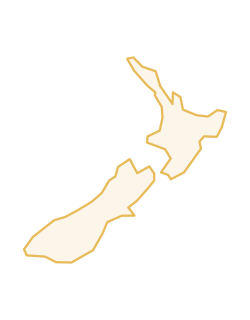
 Highlighted destination
 01
01Professional profile
The discussion can focus on whether the applicant’s skills and background justify a closer pathway review.
Guidance for qualified professionals exploring New Zealand through a skilled residence-to-citizenship pathway.
New Zealand is presented by DTC as a citizenship-by-residency programme for qualified professionals. The pathway begins with an appropriate skilled residence route and is considered as part of a longer-term plan toward citizenship after the applicable residence and nationality requirements are met.
A useful first review looks at the applicant’s professional background, the pathway being considered and the practical residence requirements that may apply. DTC can then explain which points require confirmation before the client decides whether to pursue a deeper eligibility assessment. For citizenship by grant, applicants ordinarily need the required immigration status and substantial physical presence during the five years before applying; the official standard includes 1,350 days total and 240 days in each year, subject to applicable exceptions.
The points below are tailored to the programme you are viewing and are intended to help frame a private consultation.
01The discussion can focus on whether the applicant’s skills and background justify a closer pathway review.
 02
02Useful for clients considering a skilled residence pathway as part of a longer-term route toward citizenship.
 03
03Family circumstances can be considered alongside the applicant’s skilled residence-to-citizenship pathway.

Presented as public context for clients who want a clearer visual snapshot of current passport strength.
Mobility data is public information about the passport held by existing citizens. It does not indicate eligibility for citizenship or predict an application outcome.
New Zealand should be considered as a staged pathway rather than an immediate passport route. Professional background, residence eligibility and the ability to meet future nationality requirements all matter to the planning discussion.
A clear seven-stage journey designed to keep each programme discussion organised from the first consultation through the final stage.
Share your objectives and what you are exploring.
Discuss priorities, family plans and longer-term goals.
Review the circumstances relevant to possible pathways.
Identify the routes worth considering in more detail.
Organise required documents and supporting information.
Receive structured guidance through the relevant stages.
Move through the final steps of the selected process.
These answers provide public context. Current legal requirements and individual eligibility should be confirmed before relying on a specific route.
It means the planning discussion begins with a lawful residence pathway and treats citizenship as a later objective after the applicable residence and nationality conditions are met.
No. Passport mobility describes access for existing New Zealand citizens. Skilled residence eligibility is assessed under the relevant immigration rules.
DTC presents New Zealand through a skilled residence-to-citizenship planning route, so the applicant’s professional profile and the current residence pathway are central to the initial review.
For most adults applying for citizenship by grant, the process begins with an immigration status that permits indefinite residence, followed by meeting citizenship criteria including presence, character and language requirements.
The standard citizenship-by-grant presence rule generally requires at least 1,350 days across the five years before applying and at least 240 days in each of those five years, while meeting the relevant immigration status conditions. Exceptions can apply.
No. Skilled residence is an immigration outcome; citizenship is a later, separate application under nationality law. Approval of one does not guarantee the other.
No. Buying a property by itself is not a direct citizenship route. The immigration and nationality eligibility rules are separate.
Government information: Immigration New Zealand · New Zealand citizenship presence requirements · Guidance last reviewed October 2026.
Share your profile and objectives so the programme can be reviewed in the right context.
Explore additional destinations or use the Programme Finder to create a shortlist based on your preferences.